





RARE FINDS | Mooleh Manay Excelsa
📦 Pre-orders only, available to ship in:
-
Free Shipping for orders $60+


Small Batch roasted to order - next roast on Aug 20th
Note: all other coffees with this order will be shipped together.
Coffea Excelsa is an entirely different coffee species than Arabica or Robusta coffee. It has a complex flavor profile, lower caffeine content than both Arabica and Robusta, and shows great potential as a more climate resilient coffee species. It is more drought resilient than Robusta, and pest resilient than Arabica. We're excited to bring you Mooleh Manay's Excelsa, the first farm in India to produce specialty grade Excelsa!
Tasting Notes:
Bright tropical fruit flavors with a lingering sweetness and syrupy body. We taste flavor notes of mango, pineapple, jackfruit, and ginger candy, like a tasty fruit roll up bursting with flavor. This coffee is medium bodied with complex flavor notes and smooth finish that is sure to delight you with every sip.
100% Arabica coffee
Recommended Brew Methods:
Pourover, Chemex, Aeropress.
Rest coffee for at least 10 days from roast date.
Coffee Origins:
Mooleh Manay estate is located near the beautiful backwaters of the Harangi Reservoir in Northern Coorg, one of the largest coffee growing regions in the southern state of Karnataka, India. This is 5th generation coffee estate currently managed by husband and wife duo, Akshay Dasrath and Komal Sable, who stay on the estate and manage daily operations. The estate cultivates a variety of coffee species, including Arabica, Robusta, and Excelsa, and uses a data-driven approach to optimizing agricultural practices and maintaining the rich biodiversity of the land. Coffee grows under the shade of tall sliver oak and rosewood trees along with pepper, oranges, jackfruit and a few avocados, papaya, and passion fruit as well. It is common to spot wildlife like the barking deer, wild boar, green pigeon, and the grey hornbill on the estate.
The Excelsa coffee species grows as a small tree rather than shrub like it's Arabica and Robusta cousins. It is called Mara Kaapi ('tree coffee' in the local language) and is believed to provide shade and protection from wind, thus helping regulate the microclimate around the coffee plants. This practice is common in some parts of India and is an example of how traditional agricultural knowledge can be combined with modern scientific research to create more sustainable and resilient farming practices.
Learn more about Mooleh Manay and their sustainable practices here.
Processing Method:
Natural Community - This coffee starts with hand picking only the fully ripe, deep red cherries, which sets the stage for clean, consistent flavor down the line. Next, the cherries take a float test in water, keeping the healthy, dense ones that sink while the underripe or damaged ones float away and get removed. The good cherries then dry slowly in thin layers on raised beds inside a covered greenhouse structure, which protects them from rain and harsh sun while preserving delicate flavors, and workers turn them by hand several times a day to keep drying even and prevent mold. Every evening the cherries are covered up to keep dew and moisture out overnight, and drying continues until they reach a precise moisture level of 11 to 12 percent, the sweet spot for stability and flavor preservation. Finally, the dried cherries rest in jute sacks for at least two months, a resting period that lets moisture even out and flavors come together for a more consistent, clear tasting cup.
Producer: Akshay Dasrath and Komal Sable
Region: Coorg, Karnataka, India
Altitude: 3,300 feet / 1,000 meters
Species: Excelsa
Process: Natural Community
Dive into our culture
India’s coffee culture is constantly evolving. Learn about its rich history and unique brewing traditions.
Brew with us
Explore a variety of roast levels and flavors and enjoy at home brewed with any method.
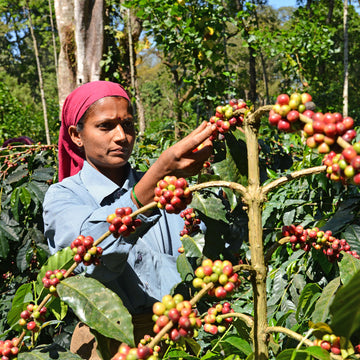
Travel to the farm
Learn about the rich landscape and generational farming practices that make Indian coffee unique.
